Customized books, including hardcover commemorative albums, children's picture books, brand catalogs, product catalogs, and handmade cards, carry unique stories, brand expressions, and educational significance. In the public's perception, the printing industry is often associated with environmental problems such as deforestation, wastewater and waste gas, cutting waste, and inventory backlog. Circular printing breaks the linear consumption pattern of "mining - production - use - disposal" and builds a closed-loop system covering design, material selection, production, distribution, and recycling, making personalized books a low-carbon and environmentally friendly choice.
Unlike mass-produced standardized book publishing, custom printing orders have distinct characteristics: a wide variety of styles, large fluctuations in batch quantities, and highly personalized sizes and processes. Without proper planning, problems such as wasted printing plates, excessive printing, idle samples, and wasted auxiliary materials can easily occur. "Circular printing" goes beyond the simple use of recycled paper; it represents a comprehensive, sustainable production philosophy that spans the entire value chain. It allows for the fulfillment of highly personalized client requirements—such as thread-sewn hardcovers, foil stamping, digital edge printing, or custom die-cutting—while continuously reducing the environmental footprint of every individual custom-printed book.
I. Design at the Source: Minimizing waste as early as the blueprint stage—the starting point of a circular approach.
Many people think that environmental protection is a matter of the production process, but the recycling process actually begins from the moment the designer finalizes the design.
In the initial stages of working on the customized book project, we incorporated low-carbon principles into the design specifications:
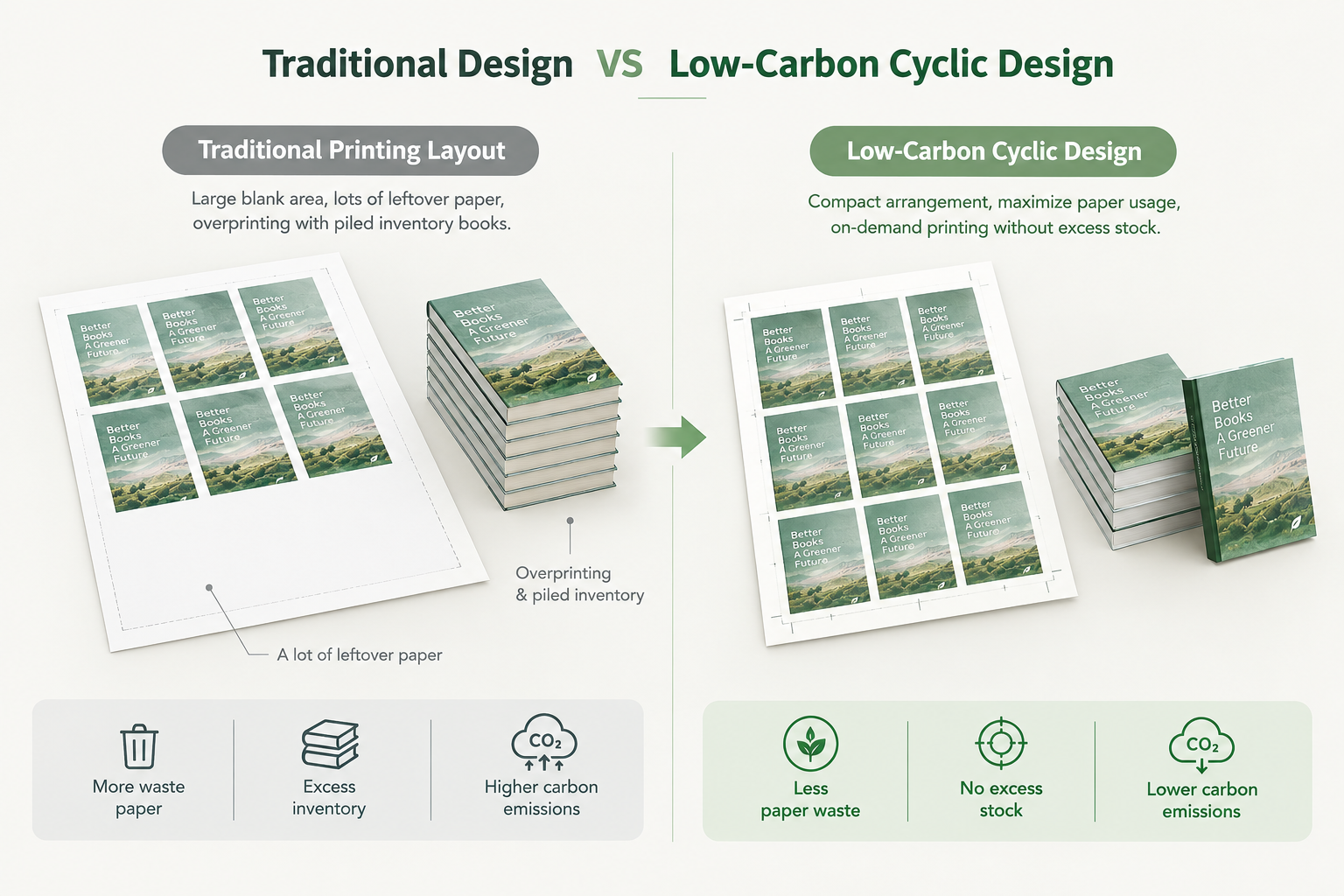
1. Optimized Imposition Plans: Utilize intelligent imposition based on the specific trim size of the client’s book to maximize paper sheet utilization and minimize trim waste.
2. Informed Print-Run Recommendations: Promote print-on-demand by suggesting order quantities based on actual usage requirements; this prevents overprinting and avoids the long-term stockpiling of books that might otherwise end up as waste.
3. Streamlined Production Processes: Offer lower-pollution finishing alternatives that maintain visual quality—for example, prioritizing aqueous (water-based) coatings over lamination. While lamination can enhance tactile appeal, it makes the paper difficult to de-ink and recycle.
4. Standardized Substrate Selection: Provide a curated list of eco-friendly paper samples in advance, helping clients strike the right balance between material quality, budget, and sustainability goals.
Suitable clients: Brand owners, educational institutions, overseas DTC brands, and companies that prioritize ESG.
II. Green Material Selection: Prioritize recyclable, low-hazard base materials that are safe and easy to recover.
Paper, ink, glue, and surface-finishing materials form the foundation of a book’s eco-friendliness.
These types of materials are preferred for reusable printing:
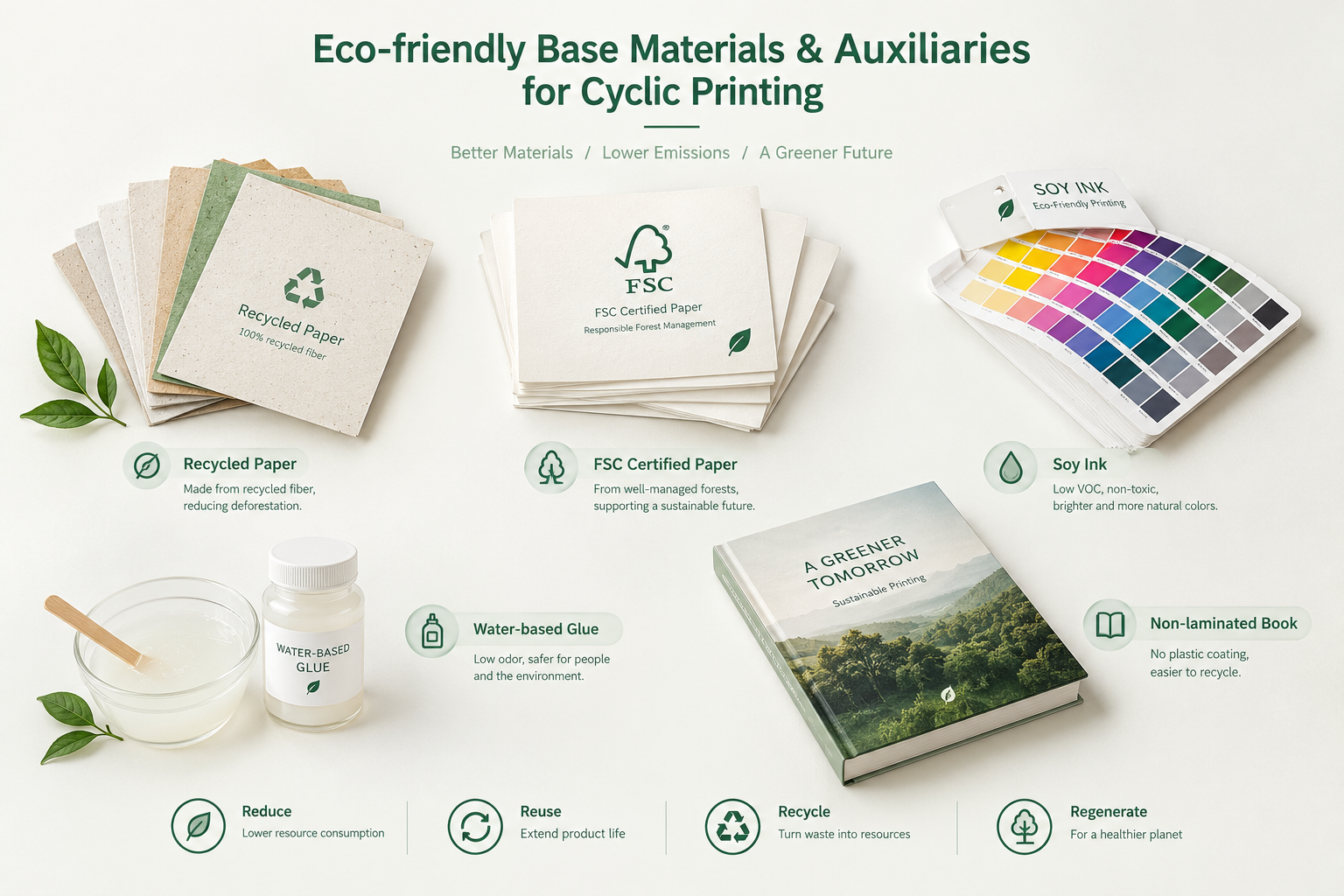
✅ FSC-Certified Paper / Recycled Paper / Bamboo Pulp Paper
FSC certification indicates that the wood is sourced from sustainably managed forests. Recycled paper is made from recovered waste-paper fibers, significantly reducing the need for logging while conserving water and energy. Bamboo pulp, derived from a fast-growing plant, serves as an excellent alternative fiber. Recycled paper is fully compatible with various custom finishing techniques—such as hardcover binding, full-color printing, digital edge printing, and foil stamping—and is safe for use in children’s picture books.
✅ Soybean ink, plant-based ink
Unlike traditional petroleum inks, soybean ink uses soybean oil as a carrier, contains less heavy metals and volatile substances, has stable color reproduction, and is easier to de-ink, making it key to subsequent paper recycling. Children's books and early education picture books are highly recommended.
✅ Water-based Adhesives and Varnishes
Low in VOCs, these products generate minimal odor during production and result in lower emissions of hazardous substances, ensuring a safer end product. They also eliminate the use of solvent-based auxiliary materials that are difficult to biodegrade and hinder recycling.
⚠️ Note: Glossy lamination (PE film) hinders paper recycling. For clients with sustainability requirements, we recommend alternatives such as uncoated finishes or water-based soft-gloss/gloss coatings.
III. Low-carbon production: Resource recycling in the workshop, waste is no longer garbage.
After selecting the materials, the production process is the core of the cyclical implementation. The key measures implemented by the circular printing factory are as follows:
1. Digital CTP Platemaking: Utilizing processless (chemistry-free) CTP technology significantly reduces wastewater generation and the consumption of chemical agents. For small-batch digital printing orders, the traditional platemaking process is bypassed, thereby minimizing plate material waste.
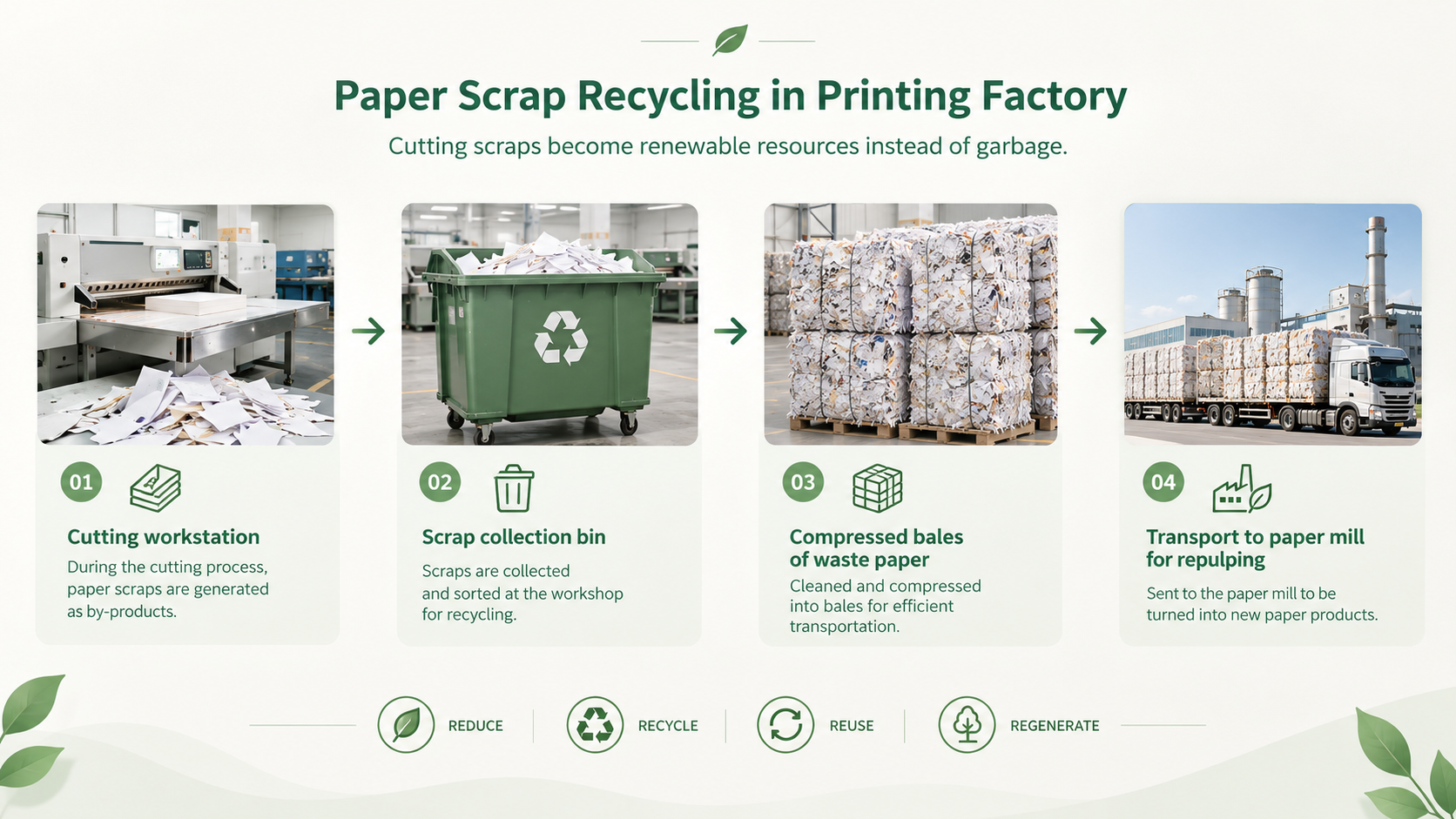
2. Centralized Scrap Recovery: Paper trimmings and waste sheets are collected and baled, then sent to paper mills for de-inking and repulping. This ensures the recycling of paper fibers, preventing them from ending up in landfills or being incinerated.
3. Water and Energy Optimization: Production wastewater is treated on-site and recycled for reuse. The facility employs energy-efficient LED lighting and high-efficiency equipment to lower its overall production carbon footprint.
4. Process Control: For specialized finishing techniques—such as thread-sewn binding, digital edge-inking, foil stamping, and die-cutting—eco-friendly auxiliary materials are selected. This approach achieves the unique visual effects desired by clients while effectively controlling the emission of pollutants.
Many clients worry that eco-friendly production processes will drive up costs and delay delivery times. However, mature, circular printing production lines are now standardized—capable of handling everything from small-batch picture books to large-volume catalogs—with eco-friendly options available as flexible, value-added choices.
IV. Extending the Life Cycle: Making a book last longer is the most efficient form of environmental protection.
The best form of environmental protection is to reduce the production of new goods.
Recyclable printing not only considers "easy to recycle," but also emphasizes "durability":
♦ Sturdy, thread-bound binding, sturdy and durable, suitable for children's picture books and commemorative albums that can be read repeatedly;
♦ Reasonably balanced paper weight reduces the probability of damage;
♦ Robust and stable structural design extends the book's shelf life and durability.
The longer a book’s lifespan, the fewer times it needs to be reprinted—which translates to greater resource conservation.
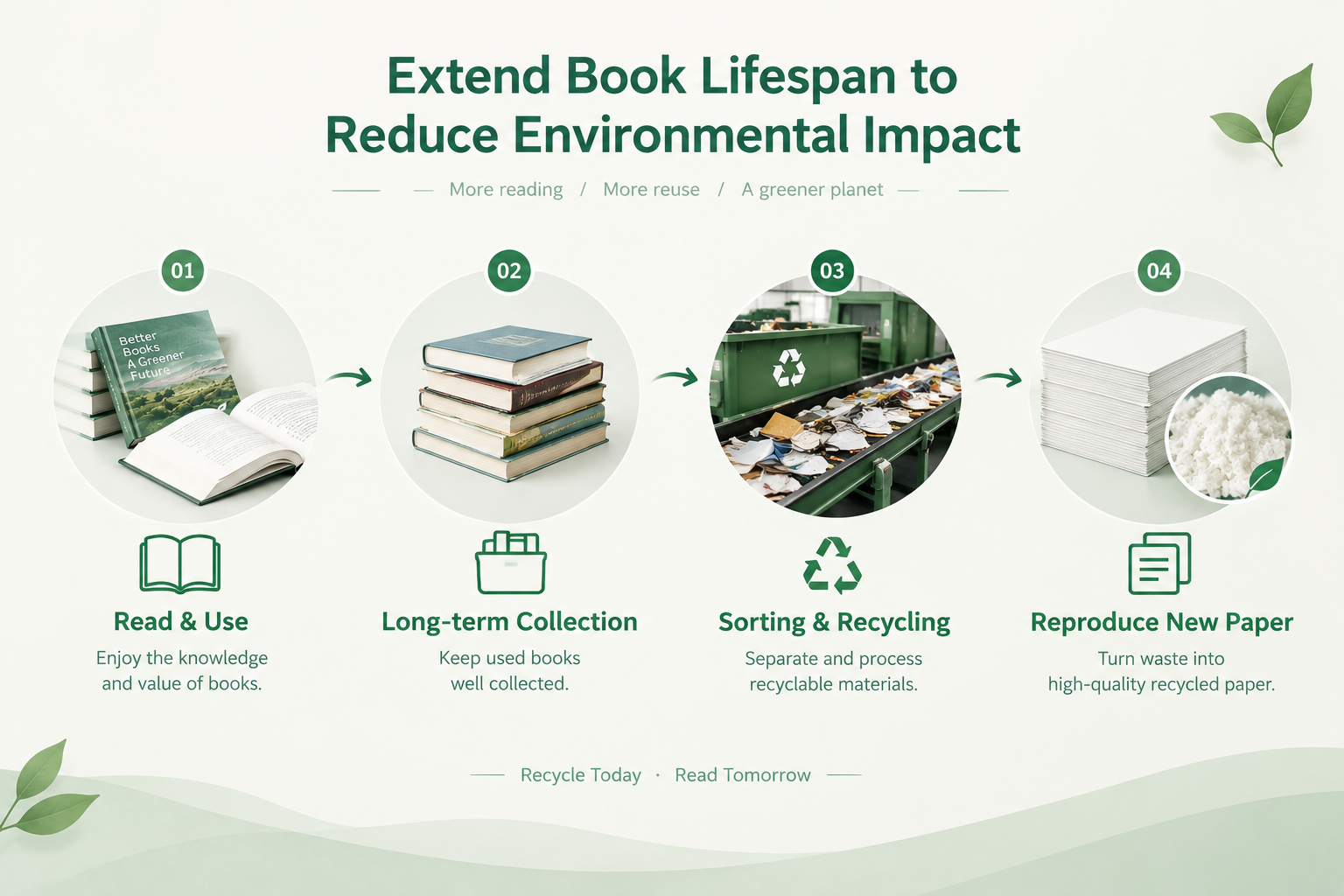
Once the books have completed their mission, as long as they are not coated or have composite materials that are difficult to separate, they can be put into the waste paper recycling system, and the fibers can re-enter the papermaking supply chain, completing the closed loop.
V. Added Value Brought to Brands by Circular Printing
Choosing circular printing for custom books goes beyond simply practicing environmental responsibility:
♦ For B2B clients: Aligned with the trend toward sustainable consumption in Europe and the U.S., factors such as ESG compliance, eco-friendly packaging, and low-carbon products serve as significant advantages in the procurement process.
♦ For educational and children’s book brands: The use of soy-based inks and eco-friendly paper conveys a commitment to both safety and sustainability.
♦ For corporate brochures and brand catalogs: Eco-friendly printing acts as a direct expression of a brand’s core values.
♦ Suppliers can provide buyers with environmental declarations and material certifications, thereby enhancing the competitiveness of their products.
Of course, circular printing has its practical limits: it is not zero-carbon, nor can it eliminate all consumption. It is a solution that continuously optimizes for reduction, recycling, and low pollution under the constraints of personalized custom printing.
Conclusion
For a long time, the unique nature of customized books has often relegated them to the status of disposable gifts or one-off promotional materials. The concept of circular printing is changing this:
We no longer care solely about whether a book is a good read or if its craftsmanship is sufficiently refined; we are now also concerned with where it comes from, how many resources it consumes, and where it ends up once its use has come to an end.
Exquisite hardcover picture books, exclusive commemorative albums, and brand catalogs—you don't have to choose between aesthetics and environmental protection. Through circular printing, every custom-printed piece carries a personal touch while remaining kinder to our planet.