How to Refill an Aerosol Can?

Aerosol cans are convenient for dispensing a variety of products, from paints and lubricants to cleaning agents and cosmetics. However, once they’re empty, many people simply throw them away. But did you know that some aerosol cans can be safely refilled and reused? Refilling can save money and reduce waste, but it must be done carefully to avoid hazards.


In this guide, we’ll walk you through the steps to safely refill an aerosol can.


Is It Safe to Refill an Aerosol Can?

Before attempting to refill an aerosol can, consider the following:

Check the can’s design – Some aerosol cans are designed for single use only and cannot be safely refilled. Look for refillable models or cans with a refill valve.

Use compatible products – Only refill with the same type of product (e.g., don’t mix paint with lubricant).

Work in a well-ventilated area – Aerosol propellants can be flammable or toxic.

Wear protective gear – Gloves and safety goggles are recommended.


If in doubt, consult the manufacturer’s guidelines.


Steps to Refill an Aerosol Can


Materials Needed:

Empty aerosol can (ensure it’s clean and depressurized)
Refill product (same type as original)
Aerosol can refill adapter (available online or at hardware stores)
Funnel (if needed)
Safety gloves & goggles

Step-by-Step Process:

1. Release All Pressure
- Shake the can to ensure it’s empty.
- Press the nozzle until no more gas or product comes out.

2. Remove the Nozzle
- Carefully pry off the plastic spray nozzle using a small flathead screwdriver.

3. Attach the Refill Adapter
- If using a refill adapter, connect it to the can’s valve stem.
- If refilling manually (without an adapter), use a small funnel to pour the liquid into the can.

4. Add the New Product
- Slowly transfer the new product into the can, leaving some space for propellant (if applicable).
- Avoid overfilling—leave about 20% empty to allow for pressure buildup.

5. Re-pressurize (If Needed)
- Some refillable aerosol cans require adding a new propellant (like compressed air or butane).
- Use a propellant charger if necessary, following safety instructions.

6. Reattach the Nozzle & Test
- Secure the nozzle back in place.
- Shake well and test-spray in a safe direction.

Safety Precautions
- Never puncture or weld an aerosol can – This can cause explosions.
- Avoid open flames– Propellants are often flammable.
- Dispose of damaged cans properly – Take them to a hazardous waste facility if unusable.

Refilling an aerosol can can be an eco-friendly and cost-effective solution, but it must be done with caution. Always prioritize safety and follow proper procedures. If you’re unsure, consider purchasing a refillable aerosol system instead.

The Sihai Factory is going to add new printing equipment!

Guangdong Sihai Iron-Printing & Tin-Making Co., Ltd. was founded in 1998, is a professional Aerosol Tin Cans manufacturer. We specialize in tinplate trading, coil cutting, coating, printing and tin-making for more than 27 years.

Our factory has 2 advanced Japan Fuji PRIMEX-F452 printing lines, 2 paint lines and 9 tin-making lines, and more than 20 automatic punching machines and plastic injection machines, with an annual production capacity of 300 million cans.

Now our factory plan to add a 4-color(CMYK) printing line in May 2025. At that time, it will further increase our capacity and offer the shorter delivery times to our customers.

If you have any needs in the empty aerosol tin cans, please feel free to contact us for consultation at any time!

How Important Is Customizing Personalized Packaging for Your Macaron?

How Important Is Customizing Personalized Packaging for Your Macaron?

When it comes to macarons, presentation is just as important as taste. These delicate, colorful confections are not just desserts; they are a visual and sensory experience. In today’s competitive market, customized macaron packaging plays a crucial role in enhancing brand identity, preserving product quality, and creating an unforgettable customer experience.

1. Enhancing Brand Identity

Customizing your macaron plastic packaging helps your brand stand out. A thoughtfully designed clear macaron box with a branded logo or unique pattern can instantly make your product more recognizable. Unlike traditional macaron packaging where macarons are placed upright, our unique plastic macaron containers allow them to lie flat, showcasing the intricate patterns and decorations on top. This distinctive presentation not only enhances the aesthetic appeal of your product but also sets your brand apart in a crowded market. When customers see a beautifully arranged set of macarons with elegant designs clearly visible, they are more likely to remember your brand and associate it with high quality and attention to detail.

2. Protecting Your Macarons During Transport

Macarons are fragile, and without the right packaging, they can easily crack or lose their shape. Plastic macaron containers with specially designed insert trays ensure each macaron stays in place, preventing movement and damage. A blister-style macaron tray with secure locking features helps maintain freshness while offering excellent protection during transport or delivery.

3. Elevating the Customer Experience

Consumers today expect more than just good taste—they appreciate aesthetics and thoughtful packaging. A beautifully designed macaron plastic packaging enhances the unboxing experience, making your customers feel special. Transparent packaging allows buyers to see the vibrant macarons inside, increasing their appeal. Adding festive designs or themed packaging for holidays and events can further boost engagement.

4. Sustainable and Eco-Friendly Options

Eco-conscious customers prefer sustainable packaging, and choosing recyclable clear PET plastic macaron boxes shows your commitment to environmental responsibility. Offering biodegradable options or reusable packaging solutions can attract more customers who prioritize sustainability.

5. Boosting Sales and Marketing Impact

High-quality customized packaging can be a strong marketing tool. Customers are more likely to share aesthetically pleasing packaging on social media, leading to organic brand promotion. Whether through Instagram worthy packaging or unique unboxing videos, personalized macaron packaging enhances brand visibility and increases repeat sales.

Conclusion

Investing in custom macaron plastic packaging is more than just a practical choice—it’s a strategic move to strengthen your brand, protect your products, and delight your customers. Whether you opt for a clear macaron box with logo printing or a plastic macaron container with a unique design, customized packaging sets your business apart in the competitive dessert industry.

Looking for high-quality, customizable macaron packaging? Contact us Funsoon Packaging today to explore our range of clear plastic macaron boxes, blister insert trays, and foldable macaron packaging options tailored to your brand’s needs.

Why do creases often occur on the fabric surface? Engineers with years of experience have found a solution!

The processes of cotton knitting fabric(scouring, bleaching , dyeing and etc.) is generally carried out in the overflow machine. During the entire processing, the fabric remains in a rope-like state. The fibers constantly bend and deform in the dyeing machine, the original hydrogen bonds are constantly broken while new hydrogen bonds are constantly formed. Sometimes the newly formed hydrogen bonds cannot be fully restored, thus forming chicken claw marks and dead creases on the fabric surface.

In the single-sided fabric structure, tension of the two sides of yarn is asymmetric. After fabric is folded in one direction for a long time, it is difficult to recover. Therefore, among various structures,  especially on fabrics with less or larger weight (eg. plain weave and sweatshirt fabrics) are more prone to crease problems. The generation of creases is also closely related to yarn count and twist. The finer the yarn count and the higher the twist, the greater the possible reversal and untying of the yarn, and the more likely it is to cause crease problems.


fabric dyeing machine


The main process steps leading to creases: scouring and bleaching

1. The general dyeing and finishing process typically involves: fabric preparation → seam sealing → boiling and bleaching in the fabric dyeing machine → dyeing → soaping → color fixing → softening → fabric out from dyeing machine → dehydration → drying. It is commonly believed that creases mainly form in the dyeing machine. However, after rigorous experimental verification by our engineers, it has been found that most cotton knits actually develop creases during the boiling and bleaching stage, which are just not easily observable before dyeing.


2. Based on the years of experience of our engineers, the following types of fabric and equipments are prone to developing creases during the boiling and bleaching stage:

Fabric factors: Single-sided cotton fabrics with lighter or heavier weights (e.g., weights <150g or >300g), especially cotton spandex (with elastane) fabrics.


Machine factors: Compared to L-shaped overflow fabric dyeing machine, J-shaped overflow fabric dyeing machine are more prone to creating creases due to their stronger stretching force. Air-jet fabric dyeing machine, on the other hand, are less likely to cause creases because the fabric is fully blown open by high-pressure air at the nozzles, allowing the fibers to "rest" from tension, which aids in eliminating internal stress and reducing creasing issues.


Process factors: Fabrics that have not undergone prestretching are more prone to creasing. Fixing the fabric under high temperatures can improve fiber proximity and orientation, stabilize fiber morphology and reduce likelihood of changes occurring in dyeing machine, which is beneficial for reducing creases.

knitted fabric

350g pure cotton knitted fabric (no creases after dyeing)


knitted fabric after dyeing

140g pure cotton knitted jersey (no creases after dyeing)


Solutions of scouring and belaching creases 

1. General Method: During boiling and bleaching, as well as dyeing, polyacrylamide-based lubricants are added. The primary role of this type of lubricating agent is to "reduce friction between fabrics and between fabrics and machinery," but it is difficult to resolve creases formed during boiling and bleaching.


2. Solution Proposed in This Article: To improve creases during boiling and bleaching, the following auxiliaries, processes, and operations are employed. Satisfactory results have been confirmed through applications by multiple clients.


Auxiliaries:

A. Preferentially select a high-concentration and highly soluble polyacrylamide-based anti-crease agent JET (non-ionic) for use in the bath. Its role is to reduce friction between fabrics and between fabrics and machinery.

B. Select new type of anti-crease softener RCE (non-ionic). Its role is to impart good softness and smoothness to the fabric itself, as well as to provide level dyeing properties. 

The combined use of these two auxiliaries is the core of this method.


Process:

Reduce the heating rate; the focus is on reducing the cooling rate, with an optimal range of 1.0 to 1.5°C/min.


Operations:

Before entering the dyeing machine, the gray fabric should be placed in an area with high humidity in workshop to allow for sufficient moisture regain. During moisture regain, the fibers undergo some swelling, and internal stresses are partially eliminated, which is conducive to reducing creases. After the gray fabric is loosened, it should be allowed to freely pass through a J-shaped trough, while simultaneously being pressed by a press roll or stretched by rollers, which is conducive to eliminating internal stresses and reducing creases.


3.Process example

dyeing processing

Before boiling and bleaching, add refining permeant, etc., anti-wrinkle agent JET and anti-wrinkle softening agent RCE in the bath, do not heating firstly, cycle for 20 minutes after entering the cloth, so that the grey cloth is fully moistened and the auxiliary agent fully reacts with the fabric fiber. If bleaching is required, caustic soda and hydrogen peroxide can be added before heating. Reduce the rate of heating; Especially to reduce the cooling rate, generally 1.0 ~ 1.5℃/min is better; And it must be completely cooled to 50 ° C to discharge the liquid for dyeing.


Other items to prevent creases

1. In order to prevent the generation of creases, it is recommended to add polyacrylamide type lubricant - JET in the bath during dyeing, and reduce the cooling rate.

2. When dehydrating and dry cloth, open width rolling water dry cloth can be used, which not only improves the efficiency of dry cloth, but also helps to solve the problem of creasing. 

3. When stacking cloth, it is recommended that the weight should not be too large and the time should not be too long, especially when the wet cloth is stored.

4. If it is cotton rack (with spandex) fabric using this solution can not completely solve the crease problem, you can consider the presetting process. 


5. Generally, the slight crease can be solved by the setting machine, and the stubborn can be returned to the cylinder washing water, gradually heating up to 85 ° C, gradually cooling down to 50 ° C process test repair, or can be re-shaped by steam in the industrial drying machine, which can be repaired according to their respective equipment and crease conditions.

12oz Paper Cup

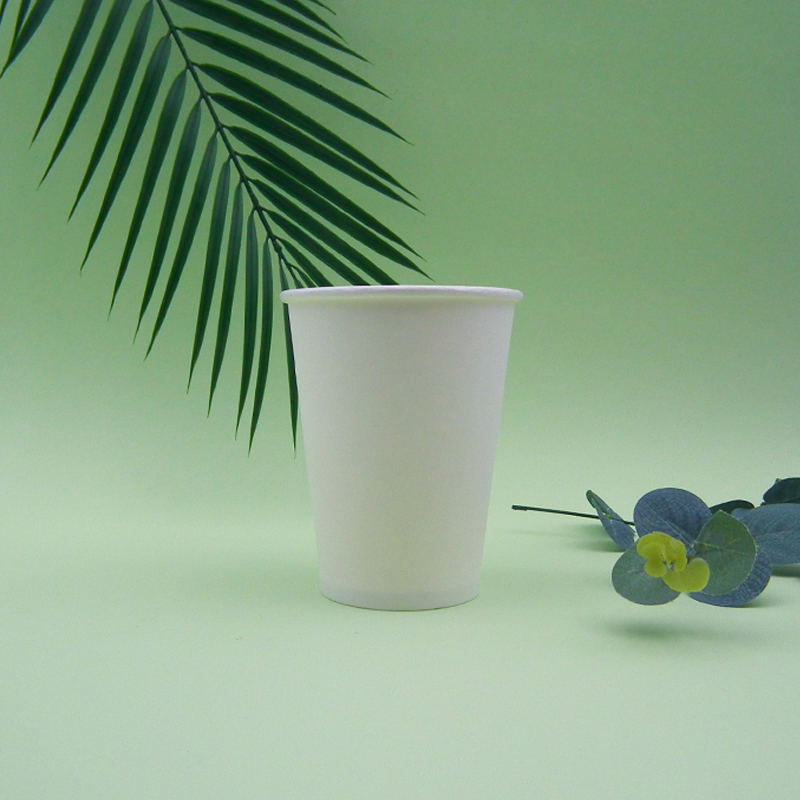
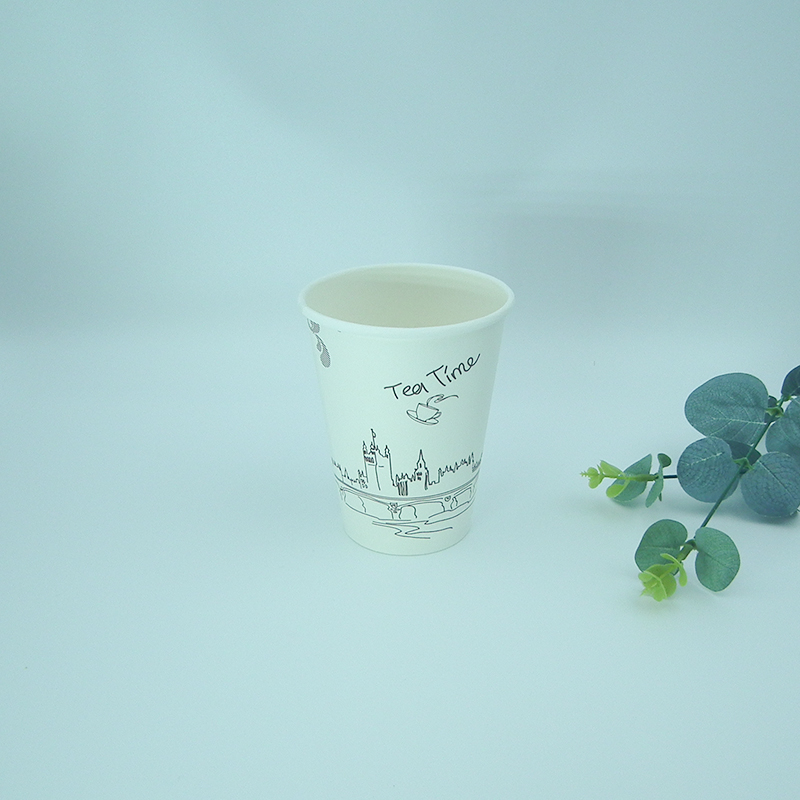
A 12oz paper double cup typically refers to a disposable cup made from paper that has an inner cup layer and an outer cup layer. The purpose of the double cup design is to provide insulation and added strength to the cup. The inner cup, which comes into direct contact with the beverage, is typically made of food-grade polyethylene (plastic) or wax coating to prevent leaks or moisture seepage. The outer cup layer provides an additional barrier and insulation, making it more comfortable to hold hot drinks without burning your hands.

cup paper
The double cup design is commonly used for serving hot beverages such as coffee, tea, or hot chocolate. The combination of the inner and outer layers helps to maintain the temperature of the drink and protect the drinker's hands from excessive heat. Additionally, the double cup design adds stability and strength to the cup, reducing the likelihood of it collapsing or breaking.
disposable coffee paper cup

It's worth noting that the specific features and materials used in 12oz paper double cups may vary depending on the manufacturer or brand.

custom paper cups

If you are interested in our disposable paper cup, please email to: may@risingfortunetrading.com

Australian Released National Plastic Plan 2021

The Department of Agriculture, Water and Environment of Australia released《National Plastics Plan 2021》, which outlines how the Australian government increase the recycling of plastics, as well as the use of other types of materials, such as paper packaging, to replace the traditional plastics and reduce the plastic pollution.

According to the plan, the Australian government has put forward annual tasks, to complete the goal that they will phase out the traditional plastic gradually in some key industries, such as packaging and catering, and will try to replace plastics with recyclable or compostable materials, such as Paper, sugarcane fiber. The Paper Packaging (paper food containers, takeaway paper boxes, paper food boxes) will be a good option in packaging and catering then.


Bagasse Lunch Boxes Become a Popular Choice

clamshell bagasse lunch box

The reasons why bagasse lunch boxes are becoming more and more popular are as follows:

1. Enhanced environmental awareness: Bagasse lunch box is a degradable lunch box made from sugarcane bagasse, which can be decomposed naturally and has less impact on the environment. As people become more concerned about environmental protection, more and more people are choosing to use degradable food packaging.

biodegradable bagasse clamshell lunch box

2. Health and safety: Bagasse lunch boxes usually do not contain chemical additives and are not bleached during the production process, which reduces harmful substances to the human body. Compared with traditional plastic lunch boxes, bagasse lunch boxes are healthier and safer and can ensure the quality of food.
seperate bagasse 2 compartment lunch box
3. Multifunctional utilization: Bagasse lunch boxes have good thermal insulation performance and load-bearing capacity, can bear a certain weight of food, and are suitable for packaging hot food, cold food and take-out food. The bagasse lunch box can also be heated in the microwave, which is very convenient.
bagasse lunch box fast food black
4. Promote agricultural and sideline products: Sugarcane bagasse is a by-product of sugarcane processing. Using bagasse to make lunch boxes can effectively utilize agricultural and sideline product resources, reduce waste, and improve resource utilization efficiency.
biodegradable bagasse 2 compartment lunch box

In general, the popularity of bagasse lunch boxes is due to the comprehensive impact of factors such as increased environmental awareness, health and safety needs, multi-functional utilization, and utilization of agricultural and sideline products resources. This biodegradable lunch box meets modern people's pursuit of environmental protection and health, and has gradually become a popular choice.


If you are interested in our sugercane bagasse lunch box or other bagasse products, please send your inquiry to my email: may@risingfortunetrading.com, or my whatsapp: +86 15711527933, i will reply you within 2 hours.

Bagasse Products are Range of Biodegradable and Compostable Plates

RF Bagasse Collection is a range of biodegradable and compostable plates. All plates and bowls are made from 100 percent tree-free, chlorine-free, Pesticide free, dye-free, natural discarded Wheat stalk and Bagasse (sugarcane fiber) and have a sturdy construction that is even liquid-resistant. Ecoriti Bagasse disposable dinnerware contains no plastic and is fully compostable. Plates and bowls have no plastic or wax. All Bagasse dinnerware is microwave safe. These takeaway food Bowls are a natural, chlorine-free alternative to traditional styrene alternatives. Made from renewable sugarcane. This bowl is used for dry, semi-dry, and liquid items used for packaging and 100% eco-friendly and compostable products. Made from sugarcane, suitable for hot and cold Sup, they are microwave- and freezer-safe. They are also known as pulp Bowls.

bagasse food trays

100% CHEMICAL FREE MADE WITH NATURE’S BY-PRODUCT

Our disposable Bowls & Plates completely steer away from chemicals that leech into food or binders that compromise biodegradability. These sugar cane utensils designed as white square paper plates are chlorine-free, pesticide-free. It is made from sugarcane waste which would have otherwise gone to waste, so we have the eco-friendliest sugar cane plate All our bagasse plates are Microwave safe and liquid-resistant the plates can be used for heating food in microwaves. The plates are also Oven proof up to 220 degrees Celsius. You can also keep our plates in freezers. These are liquid-resistant plates that can be used for both cold and hot food. That means buying these white paper plates; you buy the best deal of microwave-safe disposable sugar cane plates.

bagasse bowls

COMPOSTABLE AND SUSTAINABLE

Make a statement with your party guests on your environmental consciousness with our Sugar cane plates and sugar cane bowls, this bagasse product can be decomposed within a matter of months in a certified facility, leaving no footprints behind. Become a nature-friendly party planner with our sugarcane paper plates.

bagasse salad bowl

ECONOMICAL VALUE PACK

Whether you are looking for bowls or plates to serve your guests at a wedding, porch party, luau, barbecue, take with you on that camping trip, or use them as sugar cane dessert plates, these Bagasse party plates blend convenience and value. For a big crowd or for small our bagasse plates will serve all-purpose keeping the waste management in mind.

bagasse burger box

Contact us today at +86 18150018770 or by sending an email to rf05@risingfortunetrading.com.

Make sure you check out our Bagasse Products webpage for the full range of sizes and more information as well.

Webeite:https:https://www.risingfortunepackaging.com/


Bamboo fiber + bagasse! Make perfect biodegradable tableware

Bamboo fiber + bagasse! Make perfect biodegradable tableware: low cost, high strength, hydrophobic and oil resistant, half degrades in 2 months


Disposable tableware has brought convenience to people's life, especially with the development of the food delivery industry, the number of disposable tableware consumed by people has soared. Our country's online takeout platforms are dominated by certain group and certain hungry. An environmental protection organization has carried out a statistic on the amount of disposable dinnerwork consumed by it. It found that an average of 3.27 disposable plastic dinnerwork will be consumed per order, then these platforms will consume nearly 80 million a day, not including the consumption of other platforms and the traditional catering outlet. Around the world, 16 billion disposable paper coffee cups are consumed every year, and 1 billion plastic straws are discarded every day. This huge amount of consumption puts about 8 million tons of plastic waste into the ocean every year, which would take a conservative estimate of 450 years to degrade.

Bamboo fibers and bagasse are woven into disposable tableware


bagasse plate

Figure 1. (A) Schematic diagram of disposable tableware manufacturing from petroleum; (B) Schematic illustration of biodegradable tableware production using bagasse and bamboo fibres.

Half of it degrades in 60 days


Disposible bagasse plate

FIG. 2. (A-B) Optical microscopic images of mixed fibers at different magnification; (C-f) SEM images of tableware surface at different magnification; (G) Biodegradability of mixed fiber tableware compared with plastic tableware (H).


Using electron microscopy, the researchers found that melting of lignin in the hot-pressed fibers and hydrogen bonding between the cellulose bind the fibers tightly together, forming a 3D network that improves water resistance and strength.

To study the tableware's biodegradability, the researchers buried them in soil and regularly checked for changes in shape and weight. It was found that yellow fungus appeared on the surface of tableware after 20 days of embedding, began to deform after 30-45 days, and lost its shape completely and gradually disappeared after 60 days. And the weight of the cup dropped from 7.99g to 4.18g after 60 days, almost halving. In contrast, the appearance and shape of polystyrene (PS) tableware did not change after 60 days.

Pb content is only 1/8 of the standard


Eco-friendly bagasse plate

Figure 3. Heavy METAL CONTENT and oil resistance of mixed fiber tableware. (A) Comparison of heavy metal content in tableware; (B-C) oil resistance of tableware; (D-E) Contact Angle and water absorption of tableware.


Since it is used As tableware, it is necessary to ensure its safety first, especially heavy metals, such As Pb and As content can not exceed the standard. According to European Regulation on Food Contact Materials (EC) No. 1935/2004 and Chinese National Food Safety Standard (Food Contact paper and board materials and their products) GB 4806.8-2016,23,24, the content of Pb and As should be less than 3.0 mg/kg and 1.0 mg/kg, respectively. Inductively coupled plasma emission spectrometry (ICP-OES) was used to analyze the Pb and As contents in the mixed fiber tableware. It was found that the Pb content was 0.3633 mg/kg, which was only 1/8 of the standard value, and no As was detected.

As tableware, oil and water resistance is also critical. The contact Angle of mixed fiber tableware to water reached 127°, the contact Angle of secondary fiber molding pulp SFMP and filter paper to water was 0°, and the commercial bagasse tableware was 93°. The mixed fiber material showed excellent hydrophobicity. Moreover, the water absorption of mixed fiber tableware was only 59.4%, while that of commercial bagasse tableware was 77.5%, filter paper was 149.2%, and SFMP was 310%. Such low water absorption was due to the high hydrophobicity and compact structure of mixed fiber.

To evaluate the oil resistance of the tableware, the researchers conducted an analysis according to the Technical Association of the Pulp and Paper Industry (TAPPI) 559pM-96 standard and found that the mixed fiber tableware had a level 6 oil resistance, much higher than that of SFMP (level 1), commercial biodegradable bagasse tableware (level 4) and filter paper (level 1), showing excellent oil resistance

It holds up to 380 times its own weight


Customized bagasse plate

Figure 4. Mechanical properties of mixed fiber tableware.


The mechanical properties of the mixed fiber and PS tableware were compared. The tensile strength was 35.0 MPa, at least two times higher than that of the PS plastic cup (15.6 MPa), and the Young's modulus was 3.25 GPa, much higher than that of the PS plastic cup (1.40 GPa). A 7.9-gram cup of mixed fiber paper can hold a weight of 3 kilograms and still keep its shape, which is 380 times its own weight.

Carbon dioxide emissions are 97% lower than plastic

The researchers estimated the amount of carbon dioxide emitted during the production of mixed fibre tableware. It is reported that the carbon dioxide emissions of producing 1 kg of foaming PS plastic are 7.36 kg; According to Pro-Carton, the European Association of Carton Manufacturers, the emissions from producing 1 kg of moulded pulp products are 0.22 kg. Therefore, the CO2 emission of molded mixed fiber tableware is 97% lower than that of PS tableware, and 65% lower than that of pass-through paper and PLA plastic tableware.

The cost is close to PS cutlery

In addition to good performance, cheap materials are king. Using statistics from the Plastics Insight-Market Intelligence website, the researchers found that the blended fiber tableware cost $2,333 / ton, half that of PLA ($4,750 / ton) and close to PS ($2,177 / ton).

Conclusion: A hybrid fiber tableware with few faults


Plates from sugarcane waste

Figure 5. Comparison of the advantages of mixed fiber tableware with other materials


In order to solve the increasingly serious "white pollution" problem, Zhu Hongli's research group at Northeastern University in the United States processed bamboo fiber and bagasse fiber by blending → cold pressing → hot pressing, and prepared a fast degradation tableware, which only needs 60 days to degrade 48%. The content of Pb in tableware was 0.3633 mg/kg, which was only 1/8 of the standard. Excellent water and oil resistance; The tensile strength is 35.0 MPa and Young's modulus is 3.25 GPa, which is much higher than PS plastic cup. The CO2 emission of producing 1 kg of products is 0.22 kg, 97% lower than that of PS tableware, and the cost is only $2,333 / ton, which is close to that of PS tableware ($2,177 / ton). From safety, odor, CO2 emissions, cost, biodegradation, abundance and machinability seven aspects were analyzed, it is not hard to see compared with other materials, the tableware of the hybrid fiber materials are perfect in every respect, if mass production, to solve "white pollution" problem all over the world is just around the corner.


For any questions, please feel free to contact us.

Email: rf03@risingfortunetrading.com

Wechat/Whatsapp: +86 158 0594 7294


Contact: Nancy Liu


Corrugated Paper Tips

Corrugated paper

Corrugated paper is a plate-shaped object formed by the bonding of hanging paper and corrugated paper processed by corrugated roller. It is generally divided into single corrugated board and double corrugated board. The invention and application of corrugated paper has a history of more than 100 years. It has the advantages of low cost, light weight, easy processing, high strength, excellent printing adaptability and convenient storage and handling. More than 80% of corrugated paper can be recycled. Corrugated paper can be used as the packaging of food or digital products, which is relatively environmentally friendly and widely used.

Usage

Type a corrugated and type B corrugated are generally used as transportation outer packing boxes, and beer boxes are generally made of B corrugated. E-shaped corrugated is mostly used as a single packing box with certain aesthetic requirements and appropriate weight contents. F-shaped corrugated and G-shaped corrugated are collectively referred to as micro corrugated. It is an extremely thin corrugated, which is used as a disposable packaging container for hamburgers, cream filled pastries and other foods, or as the packaging of micro electric products such as digital cameras, portable music centers and refrigerated commodities.

Cardboard

Cardboard began at the end of the 18th century. At the beginning of the 19th century, its application has increased significantly because of its light weight, low price, wide range of uses, simple manufacture, and can be recycled or even reused. By the beginning of the 20th century, it had been popularized, popularized and applied to make packaging for all kinds of commodities. Because the packaging container made of cardboard has its unique performance and advantages in beautifying and protecting the inner goods, it has achieved great success in the competition with a variety of packaging materials. So far, it has become one of the main materials for making packaging containers with long-term use and rapid development. Cardboard is made of face paper, lining paper, core paper and corrugated paper processed into waveform corrugated by bonding. According to the demand of commodity packaging, cardboard can be processed into single-sided cardboard, three-layer cardboard, five layer, seven layer and eleven layer cardboard. Single sided cardboard is generally used as the lining protective layer of commodity packaging or to make light grids and backing plates to protect commodities from vibration or collision during storage and transportation. Three-layer and five-layer cardboard are commonly used in making corrugated boxes. The packaging of many goods is simple and exquisite through three or five layers of cardboard. Beautiful and colorful graphics and pictures are printed on the surface of corrugated box or corrugated box, which not only protects the internal goods, but also publicizes and beautifies the internal goods. The cardboard on the seventh or eleventh floor is mainly used to make packaging boxes for Electromechanical, flue-cured tobacco, furniture, motorcycles, large household appliances, etc.


Corrugated box

Corrugated box is made of cardboard. It is the most widely used paper container packaging and is widely used in transportation packaging. Corrugated box is widely used because it has many unique advantages: ① good cushioning performance. ② Light and firm.③Small overall dimensions. ④ Sufficient raw materials and low cost. ⑤ It is convenient for automatic production. ⑥ Low packaging cost. ⑦ Can pack a variety of items. ⑧ Less metal. ⑨ Good printing performance. ⑩ Recyclable and reusable.


Composite plate

Corrugated composite board is a new type of material that is emerging after the introduction of honeycomb paperboard in the United States and Europe. It is a new generation of high-tech achievement with complete intellectual property rights from the whole automatic production line equipment to finished products in China. The finished products have the advantages of light weight, high strength, no deformation, good rigidity, strong cushioning performance, good sound insulation and heat insulation effect. After proper treatment, they can be flame retardant, moisture-proof and waterproof. Moreover, the requirements for raw materials are lower than those of honeycomb paperboard. Recyclable waste paper and old corrugated boxes are used as production raw materials, so the sources of raw materials are wide and sufficient. The finished products can be recycled after use, which meets the environmental protection requirements of resource recycling and has a very wide application prospect. Corrugated composite board can be made into packing boxes and liners of various precision instruments, electromechanical equipment, household appliances and ceramic products, as well as pallets, cushion liners and aviation turnover boxes of various specifications; In terms of building materials, corrugated composite board can be used to make light partition wall, sound insulation board, temperature insulation board, furniture and export disposable beach dining table, as well as the emerging sanitary sterile paper coffin for cremation.