Long Tube Overflow Jet Fabric Dyeing Machine: Defining the Modern, High-Efficiency Solution for Gentle Fabric Processing
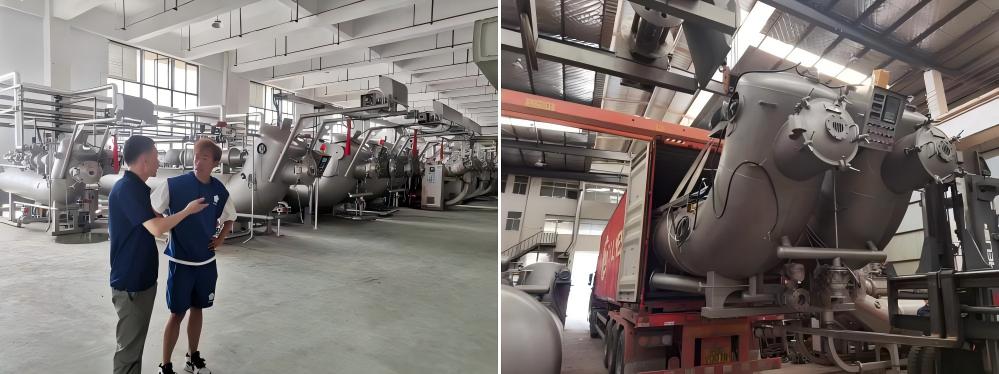
Long tube overflow fabric dyeing machine , as prime example of combined overflow and jet dyeing technology. It has become essential machine for processing high-end and delicate fabrics(eg. knit and woolen). It facilitates thorough interaction between fabric and dye liquor under low-tension condition, striking an optimal balance between dyeing quality and production efficiency, which makes it is pivotal choice for modern dye house upgrades.
Core Advantages: Why It Becomes Preferred Choice for High-Quality Dyeing
Inherent value of long tube fabric dyeing machine lies in integrated advantages afforded by its distinct working principle. Designed to optimize dyeing result while also addressing diverse production challenge.
1. Superior Dyeing Quality & Fabric Protection
When fabric dyeing equipment during dyeing processing, fabric circulates as a relaxed rope form with minimal mechanical tension. This "gentle shower" approach excellently preserves loftiness of knits, stretch of elastic fabric and natural hand-feel of woolen fabric, preventing defects caused by stretching or distortion. Uniform liquor exchange ensures exceptional color levelness and reproducibility, minimizing batch-to-batch differences.
2. Extensive Process Adaptability & Flexibility
This type machine has good fabric compatibility. By adjusting nozzle size, liquor jet pressure and lifter reel speed, one machine can process fabric ranging from 30g/m² sheer chiffon to 1500g/m² heavy velour safely and efficiently. It can handle various fibers of fabric—from nature(eg. cotton, linen and etc.) to synthetics (eg. polyester, nylon, etc.). It is particularly well-suited for flexible production model involving diverse product type and small batch size.
3. Significantly Improved Operational Efficiency & Sustainability
Modern versions of this type fabric dyeing machinery are models of high efficiency and energy saving. A key breakthrough is drastic reduction in liquor ratio ( dye liquor to fabric) from traditional 1:20-1:30 to 1:5 or less. Low ratio indicates water savings exceeding 50% directly. With proportional reduction in dye, chemical and wastewater treatment cost. Coupled with high efficient heating exchanger and intelligent temperature control, decrease consumption of steam and shorten dyeing cycles, boosting both profitability and environmental performance.
Technical Evolution & Selection Guide: From Principle to Practice
Understanding its technological progression and key components is crucial for informed decision-making. The history of long tube overflow dyeing machine is continuous evolution toward gentler, more efficient and smarter processing.
Technical Evolution: Path of Continuous Optimization
- Early Stages (Mid-20th Century): Overflow dyeing machine and jet dyeing machine developed separately, the former with high liquor ratio and low tension, the later with lower ratio but higher mechanical impact.
- Integration & Mainstream Adoption (1970s - Present): Long tube fabric dyeing machine combined the advantages of overflow and jet type, reducing liquor ratio to 1:7-1:10 with enhanced adaptability.
- Modern Leap: Through fluid dynamics optimization and smart control, the liquor ratios is decreased as 1:5, reduced energy consumption significantly. Intelligence has become a standard configuration.
Critical Components & Selection Criteria
When evaluating fabric dyeing equipment, focus on these core parts, which determine performance:
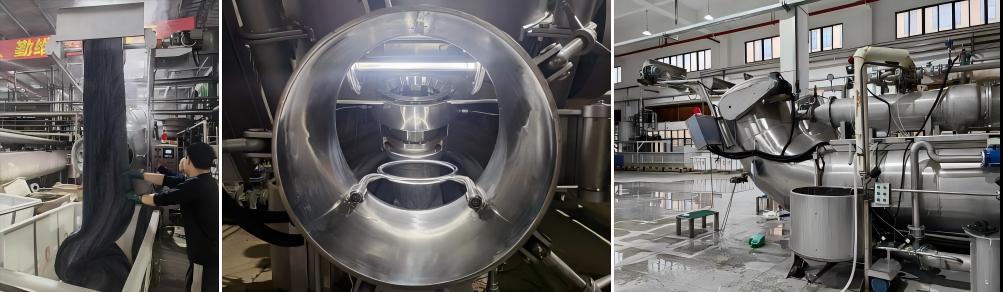
- Nozzle System ("Heart"): An optimal nozzle offers wide adjustability and scientific hydrodynamic design to ensure precise liquor delivery and traction for all fabric, from light to heavy.
- Lifter Reel Assembly ( "Auxiliary Engine"): Its synchronization with the liquor jet is vital. Precise speed control enables gentle fabric handling, preventing slippage or excessive friction.
- Intelligent Control System ( "Brain"): An advanced system accurately governs temperature, fabric speed, and pressure. It transforms complex craft knowledge into stable digital models, reducing reliance on operator skill and ensuring reproducibility.
Prioritize low liquor ratio (1:5-1:7), adjustability and reliability of core components and level of automation in the control system—these are foundational to the machine's long-term value and return on investment.
Rational Reflection: Challenge, Collaboration and Optimal Performance
No machine is perfect. Acknowledging its boundaries and challenges and cooperating with reliable dyeing machine manufacturer, are keys to success.
Inherent Challenges
- Process Complexity: Reaching its full potential still requires deep understanding of fabric properties, dye chemistry and parameters of machines. Fine-tuning is essential to avoid rope marks, abrasion or uneven dyeing.
- Initial Investment: Advanced, low-ratio and intelligent machines require a higher upfront cost than traditional model. However, savings in water, energy, steam and chemicals during operation typically ensure reasonable payback period.
- Energy Consumption Focus: While relatively efficient, its main circulation pump and heating system remain the key energy consumption parts in dyeing factory. Consequently, consumption of energy performance become vital for the equipment.
Collaborative Value with Wuxi Shin Tong Yunn Machinery Technology Co., Ltd.
Partnering with a technically proficient dyeing machine manufacturer focused on continuous innovation is very important. Superior dyeing machine supplier acts as production partner by:
- Providing in-depth process support to help clients translate equipment performance into consistent product quality.
- Offering verified process recommendations for different fabrics based on rich application data, shortening commissioning time.
- Ensuring long-term reliability and maintainability of key components, guaranteeing sustained high performance throughout the machine's lifecycle.
Long tube overflow jet fabric dyeing machine has evolved from a niche option to a standard for modern and high-quality dyeing production. It represents the industry's direction toward flexible, efficient and green manufacturing through precision engineering. For dyeing enterprises aiming to enhance product value, adapt to fast fashion supply chains or practice sustainable production, investing in this technology is more than equipment upgrade—it's a strategic step toward future-ready manufacturing. Understanding its principles, carefully evaluating your product mix and cooperating with trustworthy dyeing machine manufacturer are three crucial steps to success.